
Best Seller Authors

Book Marketing, Publishing, Author Resources

  • About
  • Twitter

Aug 07 2013

Online Bookstores Gained, While Brick-and-Mortar Lost

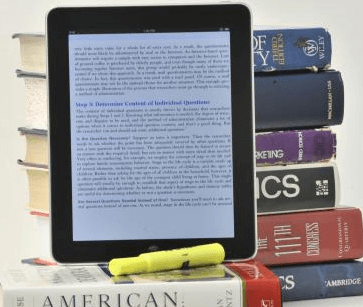
online bookstoresBowker study says bookstore chains held less than 20 percent share in 2012 while online bookstores continued to do well.

In the year following the exit of Borders from the book retail scene, online bookstores — led by Amazon — earned 44 percent of Americans’ book dollars, up from 39 percent in 2011. The insights into where book buyers are spending come from the 2013 U.S. Book Consumer Demographics and Buying Behaviors Annual Review, the publishing industry’s only complete consumer-based report integrating channel, motivation and category analysis of U.S. book buyers. The Review, an information staple published this month by Bowker® Market Research and industry trade magazine Publishers Weekly, notes that while book retailer Barnes & Noble (including BN.com) remained the second largest bookselling outlet, it depended more on sales of print books in 2012 than it did in 2011, with consumer ebook spending there declining from six percent in 2011 to four percent.

“The Review reveals the larger industry impact of the growth of ebooks,” said Jo Henry, director of Bowker Market Research, a service of ProQuest affiliate Bowker. “This is more than simply a format change. Ebooks are driving powerful behavioral changes among book buyers. The Review captures those trends, providing greater ability to predict and prepare in a very dynamic landscape.”

The Annual Review explores who is buying books, what they’re buying, along with where and why they’re buying them and the industry changes those demographics and behaviors are driving. Information is culled from the Bowker Market Research consumer panel of almost 70,000 Americans who bought books of any format and from any source in 2012 and reveals another pivotal year in the evolution of the book industry.

Among the Review’s highlights:

· Women increased their lead over men in book buying, accounting for 58 percent of overall book spending in 2012, up from 55 percent in 2011. However, men are bigger hardcover buyers – the only area where their buying outpaces women’s.

· The slowly improving economy has improved the climate for purchasing books. By the close of 2012, 53 percent of consumers said the economy was having no effect on their book buying habits, up from 51 percent at the end of 2011.

· Ebooks continue their steady upward trend, with an 11 percent share of spending in 2012, compared to seven percent in 2011.

· The growth of ebooks varies widely among the different publishing categories with their deepest penetration focused in fiction, particularly in the mystery/detective, romance, and science fiction categories, where ebooks accounted for more than 20 percent of 2012 spending.

Despite the growth of ebooks, traditional print book output grew three percent in 2012, from 292,037 titles in 2011 to 301,642 in 2012. The Review contains Bowker’s popular breakdown of print production by genre and for “Unclassified” works comprising mostly reprints and Print-on-Demand, public domain works marketed almost exclusively on the web. This category bounced back with 11 percent growth after a steep 65 percent decline between 2010 (3.8 million titles) and 2011 (1.3 million titles). In 2012, the Reprint/POD sector accounted for the largest ISBN output – more than 1.4 million titles — and as a result, drove an overall increase in print book output of ten percent.

“The book industry continued to change in some unexpected ways in 2012,” said Jim Milliot, Publishers Weekly Editorial Director and editor of the Annual Review. “The information in the annual review is just what is needed to help all industry members adjust to the new publishing reality.”

The 2013 U.S. Book Consumer Demographics and Buying Behaviors Annual Review is available now by visiting www.bookconsumer.com. Through August, the report can be purchased for $799 for a single-use PDF or print copy. After August the price rises to $999. Members of the news media can purchase at a 30 percent discount by contacting MarketResearch@bowker.com. Print copies are being manufactured on demand by Ingram Content Group’s Lightning Source, the global leader in print on demand book manufacturing and distribution.

Written by warren · Categorized: amazon, book marketing, publishing, sell books · Tagged: online bookstores

May 13 2013

Online Retailers, E-books Continue to Grow Ahead of Traditional Publishing and Bookstores

e-textbooks
Some schools are now forcing students to use e-textbooks.

E-books captured 11% of all book spending last year, up from 7% in 2011, Kulo reported, while e-books accounted for 22% of units in 2012, up from 14% the prior year. In 2010, e-books accounted for only 2% of spending. Despite the gains made by digital, paperback remained the most popular format last year, accounting for 43% of spending, down one percentage point from 2011, while hardcovers represented 37% of dollar sales, down from 39%.

The growth in the e-book format last year was one of the factors that increased e-commerce’s lead as the largest channel for book sales, Kulo noted. Online retailers, led by Amazon, accounted for 44% of sales in 2012, up from 39% in 2011. The gains made by online retailers came at the expense of bookstore chains, whose market share fell to 19%, from 26% in 2011. As consumers buy more e-books they also tend to buy more print books from the same outlet—a trend that has cemented Amazon’s position as the country’s largest booksellers, Kulo said. According to the Bowker data, Amazon captured 31% of dollars spent on all books last year, up from 26% in 2011. Despite the chains’ loss of market share, they were the only other channel besides online retailers to have a slice of the book market that was bigger than 10%. Together, chains and online retailers accounted for 63% of spending in the year, up from 56% in 2009. Independent bookstores had a 6% share of spending in the year, the same as in 2011.

Kulo also noted that the Kindle remained the most popular reading device among e-book buyers in 2012, although some members of the Kindle family gained share while others lost ground. Kindle e-ink devices fell from a 43% share in 2011 to 40% last year, but the percentage of e-book buyers who reported owning a Kindle Fire, released in fall 2011, rose to 20% in 2012, from a low base the prior year. Despite a bad holiday season, Nook was used by 15% of e-book buyers last year—the same level as in 2011. Ownership of iPads remained relatively low among e-book buyers at 19%, up from 15% in 2011. The Kindle family, by a wide margin, was also the most popular group of devices used by e-book buyers to download e-books in 2012, with 55% of the e-book buyers using either the e-ink or tablet versions. The Nook, which held second place, was used by 14%. Tablets, including iPads, came in third at 13%.

More data relating to buying trends and consumer book-buying behavior will be included in the upcoming edition of the 2013 U.S. Book Consumer Demographics and Buying Behaviors Annual Review, to be published by Bowker in June.

See full story on publishersweekly.com

Written by warren · Categorized: book marketing, e-book, sell books · Tagged: amazon best seller, online promotion, online retailers, publishing future

Nov 05 2012

“E-Book Piracy is Ruining Publishing”

pirate flag - e-book piracy
Are the pirates going to ruin publishing? The problem posed by e-book piracy is not new. It’s as old a publishing

I don’t advocate e-book piracy, but it’s time we got real about the effects. Publishers and other purveyors of old media have a lot invested in a system that paid well for them over the last Century or so.  Authors gave up control of their work and the publishers dictated how the we bought and read books (along with recorded music, broadcasting and any media). Since digital media hit the scene, they’ve been whining that their industry is doomed.. and quite likely it’s never going to be what it was in the 20th Century.

Will E-Book Piracy Ruin Publishing?

Not likely. As the price of duplication moves toward zero, there will be some who can’t depend on a system that worked for them in the past. If they haven’t read the signs over the last 30 years that digital content is making a perfect copy for next to nothing, and they are relying on printed books, they going to be hurting. But even if the big publishers completely went away, the books that have been published are here to stay, and wider distribution is good for the careers of authors.

Historical Proof of What E-Book Piracy Could Do

Almost as soon as there was publishing there was piracy… and publishers have been complaining ever since. In 1706 Edward Ward wrote:

Property of their Copies, has been of late, not only a Damage to the Trade in Generat, but a great Discouragement to Authors; for there are fo many Piratizing Printers, who lye upon the Catch, that no Saleable Poem or Pamphlet, of Twelve-pence, or Six-pence Price, can be started into the World, but the next Day yon shall have it Bastardized in White-Fryars, or Little-Britain; to the Injury of the Book-seller, and the Scandal of the Author, have it Bawld about for a penny or Two pence, nay, sometimes for a Half-penny, in every Gossipping Alley, amongst Porters Wives and Basket-Women, which we have great hopes will be prevented for the future, in the next Sessions of Parliament, and then we may hope for more of the fame Authors Writings.

STEALTH OF NATIONS: The Global Rise of the Informal Economy

This became the basis for copyright law petitions and all the laws that followed. But what of the poor authors who were damaged? In “Stealth of Nations: The Global Rise of The Informal Economy” Robert Neuwirth describes how these low priced books spread fast:

“an honest look at the history of trade shows that piracy wasn’t just a  form of trade; it was also a potent force that drove the growth of arts and culture. In particular, piracy helped expand literacy and impacted the Western intellectual tradition in some startling ways”

Neuwirth tells the story of a time when all commerce was assumed to be infected with piracy and how the raw capitalism benefited from rules.

But for how long?

Today, there are works that are held back to protect a copyright for the creator who has long since retired, huge disputes and huge corporations trying to hold on to their cash cows.

Some governance makes sense, but does the piracy end progress? Today, authors use books as calling cards, a front piece for business that benefits when more see it. As one of these authors, I don’t want someone to steal my work, but I do like to see that readers who can benefit get it.

Publishing isn’t going away. It IS going to to keep changing. In some ways don’t we all benefit from change.. even e-book piracy?

Written by warren · Categorized: book marketing, publishing, sell books · Tagged: book piracy, ebook piracy, free e-books, stealing e-books

Apr 25 2012

“Free Book”.. Is Your Book Good Enough To Sell This Way?

I heard from a friend working with best sellers from new authors. They are allowing thousands of people to download a book for FREE, intending that it will be so well received that others will buy it.

This is the competition out there for great books. The playing field is getting a lot larger.

My suggestion: Download this today and study it before you plan anything for the future.

imageExperience Heaven- A Little boy’s amazing story of his trip to heaven and back

Available FREE TODAY on www.amazon.com

The fascinating tale of a little boy bravely conquering the dread image and impact of death through a breathtaking realization of an ever greater truth will resonate with readers for a long time. The absorbing story, simple but powerful in its memorable telling, offers genuinely dramatic testimony to the sheer ability of the human consciousness to become attuned to the highest level of innate understanding. Readers may well share the same epiphany.

Written by warren · Categorized: amazon, internet marketing, publishing, sell books · Tagged: experience heaven, free ebook, free kindle, kindle best seller, sri vishwanath

Dec 16 2011

BestSellingExperts.TV Interview

I spent some time with Bob Bare of BestSellingExperts.TV while at the Author 101 University here in Las Vegas last month.

Bob reached out to me to be part of his interview series of Best Seller Book Experts.

Here’s the finished product

Written by Warren Whitlock · Categorized: book marketing, sell books · Tagged: best selling author, book promotion online, profitable social media, sell your book

  • 1
  • 2
  • 3
  • …
  • 18
  • Next Page »

Copyright © 2026 · Altitude Pro Theme on Genesis Framework · WordPress · Log in