Best Seller Authors

Book Marketing, Publishing, Author Resources

  • About
  • Twitter

May 29 2013

Author Sylvia Day: Traditional Publishers Disadvantages

publishers disadvantages
“I would not recommend authors go to traditional publisher for ebooks” says Sylvia Day

Sylvia Day was interviewed by Digital Book World about authors opportunities and publishers disadvantages

When it came to getting a book published and distributed to a wide audience, it used to be that publishing houses with editorial, production, marketing and distribution operations were in the driver’s seat. All but a select few authors could dictate where the relationship went, how fast and under what terms.

With the emergence of self-publishing as a viable option for wide distribution of books, things have changed. The number of authors who can plan their own route has increased and many authors who may have been at the mercy of agents and publishers had they been working decades ago are now selling hundreds of thousands of books on their own and making headlines with unprecedented publishing deals.

Publishers Disadvantages

“I don’t think publishers have any advantage whatsoever for ebooks. They’re at a huge disadvantage. They overcharge. They have complicated distribution agreements which limit them for offering ebooks in sertain areas. We have issues with ebooks being available to libraries. I honestly cannot say that it would be a wise decision for an author to sell a digital edition to a publisher unless they have some different terms in the contract to limit the disadvantages.”

See full story on digitalbookworld.com
Written by warren · Categorized: best seller books · Tagged: ebooks, self publishing

May 28 2013

How the Google Books Settlement Changes the Future of Reading

google books

From io9 on the Future of Reading due to Google Books

If you care about the future of books, you need to understand the Google Book Settlement. It’s a complicated legal document, but we’ve talked to some of its architects, detractors, and defenders – and break it all down for you.

The Google Book Settlement could easily be the twenty-first century’s most important shift in how we deal with copyright in the world of publishing. To understand it, you need a little back story on the previous giant shift in copyright law, which happened about twelve years ago.

Mickey Mouse Protection Act

In 1998, copyright was turned on its head by a piece of legislation often called the “Mickey Mouse Protection Act.” Known to policy-makers as the Copyright Extension Act, it was the result of intensive lobbying by the entertainment industry, led in part by Disney, to extend the copyright on any work created after 1923. Many of Disney’s classic pieces of content, like Mickey Mouse cartoons, were about to pass into the public domain. So the company was naturally interested in keeping control of the Mouse as long as it could.

The Copyright Term Extension Act was good for authors’ estates, and for corporations. Under the new rules, copyright would become life of the author plus 70 years – and for works of corporate authorship, 120 years after creation. (Previously, copyright had been life of the author plus 50 years, with 75 years for corporate works.)

The Act also gave birth to a loosely-organized but powerful movement of copyright reformists. Led by activists, scientists, artists, and tech nerds, this movement has stretched from university campuses to the Supreme Court of the United States, where law professor Lawrence Lessig argued that the Copyright Extension Act was unconstitutional because it violated the First Amendment (SCOTUS didn’t buy it). Over the past decade, many of these reformists migrated to jobs in Silicon Valley, where easily-copied digital media are constantly forcing the question of what copyright really means in the information age.

One might say that the Google Book Settlement (GBS) is the result of this migration. One of the basic injunctions of copyright reform is “share your culture,” and the seeds of the GBS come from an admirable Google project aimed at sharing the knowledge from research liaries with the world.

Many years ago the search company began digitizing the books from several university liaries, pulling every single book from the shelves and making a digital copy. The idea was to make hard-to-access texts available to anyone, not just people lucky enough to live near a major research school. Via Google Book Search, people would be able to search for keywords in the full text of any book, then read one or two-sentence “snippet” excerpts from it. The Mickey Mouse Protection Act may have stalled the growth of the public domain, but the company’s Google Book Search project would oaden it.

The Settlement

The Google Book Search project was conceived as an online liary, its texts fully searchable, and open to all. Unfortunately, when you digitize everything in a liary, a lot of books are swept up in the frenzy. Among the rare and out-of-print works Google digitized were millions of copyrighted works. When publishers and authors of those works got wind of Google’s project, some of them sued for infringement. They didn’t want any parts of their books available online for free – they wanted people to pay for them.

See full story on io9.com

Image courtesy of io9.com

Written by warren · Categorized: book marketing

May 24 2013

A Twist on Fan Fiction: Amazon Gives Readers a Say

Amazon Fan Fiction

SAN FRANCISCO (Reuters) – Amazon is once again shaking up traditional publishing models. This time, it’s giving fans a chance to add their own personal touches to their favorite fiction – and get paid in the process.

Things will kick off with Amazon licensing three teen TV series – “Gossip Girl”, “Pretty Little Liars” and “The Vampire Diaries” – from Warner Bros Television Group’s Alloy Entertainment, Amazon said on its website. More content deals will be announced in coming weeks.

Amazon has in the past decade emerged as the most disruptive force in publishing. It popularized digital books with its Kindle store and e-reader, contributing to the demise of traditional bookstores such as Borders.

In its effort to legitimize fan fiction, the company is establishing a model under which it acts as publisher and pays fan-writers between 20 and 35 percent of sales, depending on length.

“There’s probably not an author/fangirl alive who hasn’t fantasized about being able to write about her favorite show,” budding novelist Trish Milburn enthused on Amazon’s website. “The fact that you can earn royalties doing so makes it even better.”

(Reporting by Edwin Chan; Editing by Phil Berlowitz)

See full story on reuters.com

Photo Credit: Reuters/Leonhard Foeger

Written by warren · Categorized: amazon, write a book · Tagged: fan fiction

May 22 2013

Author Protection from Lies and Scams – Advice from Dan Janal

Our friend Dan Janal shared this transcript about author protection.

You can learn from reading this.

Dan Janal on Author Protection from Lies and Scams

Can you tell us a little bit about yourself and what you do?

I’ve written a book called “Internet Marketing Confidential” to help authors, speakers and coaches avoid the rip offs online. I’ve been in PR for 30 years and was a daily newspaper editor before that. I handled a lot of high-tech companies. I was on the PR team that launched AOL and was a sysop on CompuServe’s PR and Marketing forum before. So I’m dating myself! I wrote one of the first books about marketing on the Internet back in 1993! So I’ve been online a looong time!

Who can utilize and benefit from Internet marketing?

Really, every small business, as well as speakers, authors, coaches and consultants. We’ve all seen major success stories — look at the success of “Fifty Shades of Grey.” That would never have happened without online marketing and social media.

Why do you think having an Internet marketing strategy is important for authors?

Authors can reach new readers, develop a community with readers who love them, and build ands for characters and companies.

What are your recommendations for authors who don’t know how to start planning their Internet marketing strategy?

That’s a great question. There are lots of possible answers: 1) Authors should determine who their readers are. Then authors need to find out where they hang out — Facebook, blogs, Google+, etc. 2) Authors need to find out what their audiences read: newspapers, blogs, etc. 3) Authors also need to follow reporters who cover their topic by reading their blogs and comments on blogs. 4) Get known. Build relationships. 5) Authors can write press releases and get the word out to reporters as well as readers and people searching on Google. Press releases from authors can rank high on Google. I’ve had great success with PR Newswire. That’s not a plug. It’s fact. 6) Authors should fill out their profile on Amazon. 7) They can also have websites that offer free sample chapters.

How do readers find out what social media accounts their readers are using?

Authors can find groups of readers by going to Google and typing “chick lit blog” or “sci-fi blog” or “business ethics.” Authors can also find readers by searching LinkedIn and Google+. It really is easy to find readers today because so many of them join groups on social media and websites. Some authors have set up fan pages for their books and characters, especially for teen lit. It’s fun to see that! Readers discuss plots and characters — and defend authors against nonfans. It’s great to see!

What advice do you have for authors looking for an Internet marketing expert?

Authors should look for a person who has direct experience with their niche, e.g., travel, kids, or parenting books. Every niche has its own experts, buzzwords and ways of doing things. You want to find someone who has been there, done that. Authors shouldn’t have to pay to teach someone to learn your business. I guess authors could ask for references, but who is going to give a bad reference? Authors can ask their friends for referrals. Who’s done a good job for them? Meet with the person who is going to work with you. The person who sold you might not be the one who does the work. That happens a lot at PR firms. You might get an intern or young staffer. You want to meet that person and make sure she loves your book. And has contacts! You want to make sure her messages will get answered. Personal contacts are golden and well worth the price.

See full story on profnetconnect.com

Written by warren · Categorized: publishing, write a book · Tagged: author protection, lies, publishing scams, scams

May 13 2013

Online Retailers, E-books Continue to Grow Ahead of Traditional Publishing and Bookstores

e-textbooks
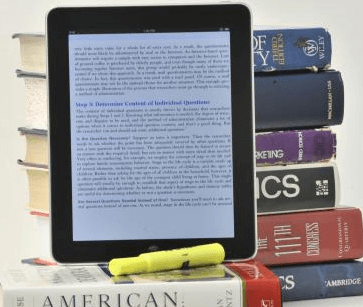
Some schools are now forcing students to use e-textbooks.

E-books captured 11% of all book spending last year, up from 7% in 2011, Kulo reported, while e-books accounted for 22% of units in 2012, up from 14% the prior year. In 2010, e-books accounted for only 2% of spending. Despite the gains made by digital, paperback remained the most popular format last year, accounting for 43% of spending, down one percentage point from 2011, while hardcovers represented 37% of dollar sales, down from 39%.

The growth in the e-book format last year was one of the factors that increased e-commerce’s lead as the largest channel for book sales, Kulo noted. Online retailers, led by Amazon, accounted for 44% of sales in 2012, up from 39% in 2011. The gains made by online retailers came at the expense of bookstore chains, whose market share fell to 19%, from 26% in 2011. As consumers buy more e-books they also tend to buy more print books from the same outlet—a trend that has cemented Amazon’s position as the country’s largest booksellers, Kulo said. According to the Bowker data, Amazon captured 31% of dollars spent on all books last year, up from 26% in 2011. Despite the chains’ loss of market share, they were the only other channel besides online retailers to have a slice of the book market that was bigger than 10%. Together, chains and online retailers accounted for 63% of spending in the year, up from 56% in 2009. Independent bookstores had a 6% share of spending in the year, the same as in 2011.

Kulo also noted that the Kindle remained the most popular reading device among e-book buyers in 2012, although some members of the Kindle family gained share while others lost ground. Kindle e-ink devices fell from a 43% share in 2011 to 40% last year, but the percentage of e-book buyers who reported owning a Kindle Fire, released in fall 2011, rose to 20% in 2012, from a low base the prior year. Despite a bad holiday season, Nook was used by 15% of e-book buyers last year—the same level as in 2011. Ownership of iPads remained relatively low among e-book buyers at 19%, up from 15% in 2011. The Kindle family, by a wide margin, was also the most popular group of devices used by e-book buyers to download e-books in 2012, with 55% of the e-book buyers using either the e-ink or tablet versions. The Nook, which held second place, was used by 14%. Tablets, including iPads, came in third at 13%.

More data relating to buying trends and consumer book-buying behavior will be included in the upcoming edition of the 2013 U.S. Book Consumer Demographics and Buying Behaviors Annual Review, to be published by Bowker in June.

See full story on publishersweekly.com

Written by warren · Categorized: book marketing, e-book, sell books · Tagged: amazon best seller, online promotion, online retailers, publishing future

  • « Previous Page
  • 1
  • 2
  • 3
  • 4
  • …
  • 25
  • Next Page »

Copyright © 2026 · Altitude Pro Theme on Genesis Framework · WordPress · Log in