Best Seller Authors

Book Marketing, Publishing, Author Resources

  • About
  • Twitter

Apr 21 2013

David Mamet and Other Big Authors Choose to Self-Publish – NYTimes.com

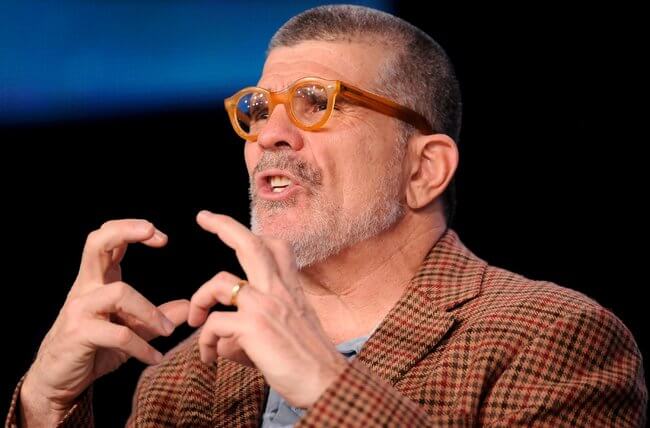
David Mamet and other best selling authors choose to self-publish

This year, when Mr. Mamet set out to publish his next one, a novella and two short stories about war, he decided to take a very different path: he will self-publish.

When the Pulitzer Prize-winning playwright and author David Mamet released his last book, “The Secret Knowledge: On the Dismantling of American Culture,” with the Sentinel publishing house in 2011, it sold well enough to make the New York Times best-seller list.

Why Self-Publish?

Mr. Mamet is taking advantage of a new service being offered by his literary agency, ICM Partners, as a way to assume more control over the way his book is promoted.

“Basically I am doing this because I am a curmudgeon,” Mr. Mamet said in a telephone interview, “and because publishing is like Hollywood — nobody ever does the marketing they promise.”

Then there is the money. While self-published authors get no advance, they typically receive 70 percent of sales. A standard contract with a traditional house gives an author an advance, and only pays royalties — the standard is 25 percent of digital sales and 7 to 12 percent of the list price for bound books — after the advance is earned back in sales.

ICM, which will announce its new self-publishing service on Wednesday, is one of the biggest and most powerful agencies to offer the option. But others are doing the same as they seek to provide additional value to their writers while also extending their reach in the industry.

Since last fall, Trident Media Group, which represents 800 authors, has been offering its clients self-publishing…

See full story on nytimes.com
Written by warren · Categorized: best seller books, book marketing, publishing · Tagged: mamet, ny times, ny times best seller, self-publish best seller

Jul 05 2010

Where ‘Six Degrees’ is Wrong

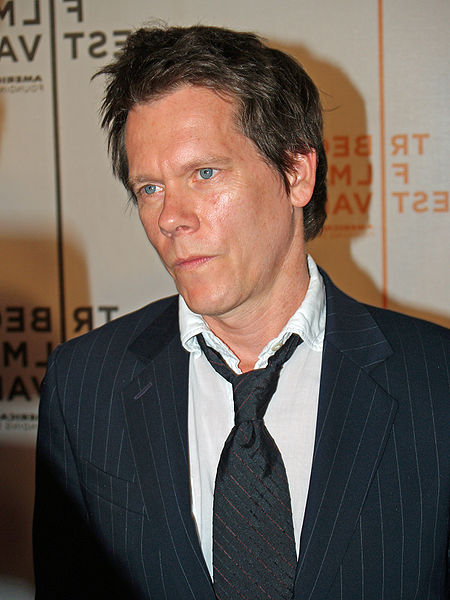
It’s fun to play the Kevin Bacon game and explore the connections between movie stars.

The game is based on the idea that you can reach any person on Earth through six other people. Studies and experiments in connectivity and networks are good ways to build the case that the more connected we are, the happier we will be, the more we’ll get done and the world will be a better place.

That’s the good part.

Sunday’s New York Times carried a piece with the headline “Twitter, a Close Knit Network” .. reporting on a study done by Sysomo (read the study to get the real facts.

Problem is, they concluded that

If Kevin Bacon had a Twitter account, he would most likely be within six degrees of separation from nearly everyone else on the site.

On Twitter, movie star numbers don’t count. It’s likely that Kevin Bacon would look much more connected but assuming he doesn’t find the time to have a conversation with millions, it’s not likely those connections would make much of a difference.

A lot of the science, surveys, ratings and calculations we’re seeing in studies about Twitter are using old school broadcast media assumptions on what it takes to spread a meme.

They assume that if someone has a lot of follower, those followers are reading what gets posted and counting it that way.

The calculation of “average number of degrees of separation” is interesting and does point to us getting better at interconnecting through technology, but seems to me to rely too much on the old idea of treating the mass as a group instead of realizing that we each have our own network and belong to many more now.

It’s as if a TV or radio station bragged that were reaching every person in their coverage area.. regardless of whether they ever turned on a set or tuned in

We Are Getting More Connected

Local-ness of the Twitter network

The connections that matter are much closer than the ones the “trace the six degrees” people are counting. We are forming tighter bonds with people in our networks buy communicating more frequently and letting them in on more of our lives.

Add this to the technology that allows each of us to spread or share a meme or message to more connections and you get the most powerful group of interconnected social networks ever.

And some fun.

Do you feel more connected? Will you have more real friends 5 or 10 years from now? Post a comment and let me know how you connect.

Written by Warren Whitlock · Categorized: online promotion, social media, twitter · Tagged: kevin bacon, ny times, six degrees, sysomo, twitter networks

Dec 25 2008

Is Your Book On Kindle?

This holiday season, it’s been impossible to buy an Amazon Kindle.. The popular ebook reader. Many say due to the product’s endorsement by Oprah.

We’ve been making all of our books available for Kindle readers, and seen substantial sales.. especially for our popular book on Twitter (“Twitter Revolution: How Social Media and Mobile Marketing is Changing the Way We Do Business & Market Online“).

According to the New York Times. Kindle sales have helped increase sales of electronic books:

So far, publishers like HarperCollins, Random House
and Simon & Schuster say that sales of e-books for any device —
including simple laptop downloads — constitute less than 1 percent of
total book sales. But there are signs of momentum. The publishers say
sales of e-books have tripled or quadrupled in the last year.

Amazon’s
Kindle version of “The Story of Edgar Sawtelle” by David Wroblewski, a
best seller recommended by Ms. Winfrey’s book club, now represents 20
percent of total Amazon sales of the book, according to Brian Murray,
chief executive of HarperCollins Publishers Worldwide.

kindle, ny times, oprah, pusblishing, twitter

Written by Warren Whitlock · Categorized: amazon, book marketing, sell books · Tagged: kindle, ny times, oprah, pusblishing, twitter

Copyright © 2026 · Altitude Pro Theme on Genesis Framework · WordPress · Log in